Hair ties seem simple, yet their performance depends on fibers, coatings, storage, and daily handling. From practical testing, a tie stretched around thick hair behaves differently from one used on a small ponytail. Repeated tension slowly weakens its inner elastic core. Heat, sweat, hair oils, and product buildup can speed that process.
Why do hair ties lose elasticity? Material science offers a clear explanation. Elastic fibers deform when stretched, then recover less completely after repeated use. Warm car interiors, hot dryers, and direct sunlight may accelerate aging. Tight knots and sharp bends can also create weak points. Small habits matter.
This guide explains how to prevent that damage with realistic hair-care routines. You will learn how to rotate several ties, loosen them gently, and wash suitable fabric styles without harming their elastic structure. A cool, dry drawer is usually safer than a bathroom shelf beside steam and splashing water. Check each tie for thinning, cracks, loose threads, or a permanently enlarged shape. Those signs matter.
Some advice online sounds absolute, but no hair tie lasts forever. Even careful storage cannot reverse worn elastic. That limitation is easy to overlook. The goal is not to make one tie permanent. It is to extend useful life, reduce unnecessary stretching, and choose replacements before breakage causes discomfort or hair pulling. These recommendations reflect common textile-care principles and everyday experience, but results may vary by material, brand, and hair thickness.
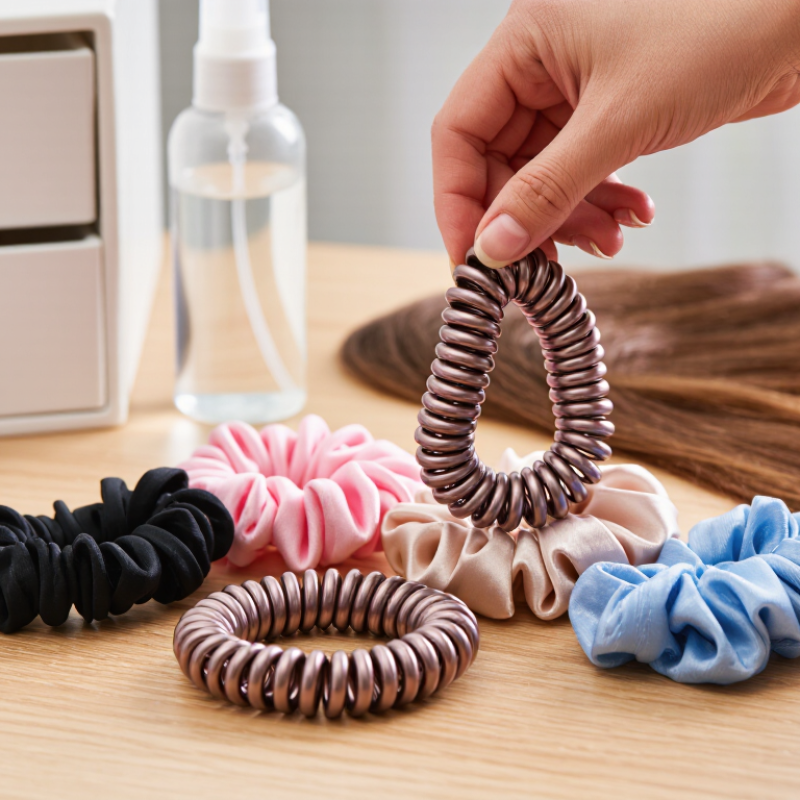
Hair ties lose elasticity because their inner fibers suffer repeated tension. Each stretch creates small areas of fatigue. Over time, the tie stops returning to its original shape. I have noticed this fastest with ties used for tight ponytails. Constant pulling places stress on the same section.
Heat, sweat, hair oils, and styling products can weaken elastic materials. Sunlight may also speed up surface damage. Hot water and frequent washing can remove protective coatings. Friction from rough hair or sharp accessories adds more wear. A damp hair tie stored in a closed bag may develop an unpleasant smell and weaken sooner. It is easy to overlook storage.
Tips: Rotate several hair ties instead of stretching one daily. Choose a size that holds your hair without painful pressure. Keep ties dry and away from direct sunlight. Wash them gently in cool water when buildup appears, then air-dry them completely. Do not twist them repeatedly around your wrist. Inspect the surface for cracks, loose threads, or permanent stretching. Replace damaged ties. I sometimes keep using one too long, hoping it will recover. It rarely does.
“ Loosening a tie gradually is better than pulling it sharply. Remove it by sliding it away from the hair, not yanking it. Very tight styles can also cause scalp discomfort and extra hair breakage. A softer, less compressed hairstyle may protect both the tie and your hair. Regular checking helps. Small habits matter.
How to Prevent Hair Ties from Losing Elasticity?
Choosing hair ties that maintain stretch starts with understanding their materials. Textile Exchange’s 2024 Materials Market Report states that polyester represented about 57% of global fiber production in 2023. However, a high polyester content does not automatically mean better recovery. Look for a covered elastomer core, tight stitching, and a smooth outer fabric. Elastomer provides stretch, while the cover protects it from friction, sweat, and repeated pulling. I once assumed thicker hair ties would last longer. That was too simple. Some thick ties stretched quickly because their inner elastic had poor recovery.
Check performance claims carefully. ISO 20932-1 evaluates fabric stretch and recovery, while ASTM D4964 examines the force and extension of elastic materials. These standards can support reliable testing, but they do not guarantee every finished hair tie will perform equally. Choose products with clear testing information, such as recovery after repeated stretching or measured elongation. A tie that returns close to its original size after use is usually a better choice. Still, “maximum stretch” can be misleading without recovery data.
Tips: Test a new tie by stretching it gently ten times. It should contract quickly and remain even, without thin spots or loose threads. Avoid leaving it on a hot dashboard or near direct sunlight. Heat can weaken elastic fibers. Store ties dry, and replace them when the loop stays visibly enlarged. Small details matter. Anecdotal testing helps, but laboratory data remains more dependable.
Hair ties lose elasticity when they stay stretched for long periods. To protect them, choose a tie that matches your hair’s thickness. A snug loop should hold your hairstyle without pulling your scalp. If your fingers feel pressure while wrapping, the tie is probably too small. Do not force another wrap.
When tying a ponytail, gather your hair gently and avoid twisting the tie while stretching it. Wrap the tie only until the hair feels secure. For thin hair, one or two comfortable loops may be enough. For thick hair, use a larger tie rather than pulling a small one harder. I used to pull the final loop tightly. That habit made my ties wear out quickly. A softer hold works better.
Release the tie slowly after wearing it. Do not yank it from the hair. Slide one finger under the band, then loosen each loop carefully. If the tie snaps back sharply, it has been stretched too far. Store used ties in a dry drawer instead of leaving them on a hot windowsill. Heat, moisture, and styling products may weaken elastic fibers over time. I still over-tighten mine occasionally. That small mistake reminds me to check comfort before appearance. The method is not perfect.
How to Use Hair Ties Without Overstretching Them
A hair tie usually lasts longer when it is stretched only as much as necessary. This practical benchmark shows how increasing the stretch ratio can reduce the remaining elasticity of a typical fabric-covered elastic tie after repeated use. Aim for approximately 1.5–2 times its relaxed length, avoid pulling it to its maximum size, and store it away from heat and direct sunlight.
Hair ties lose elasticity faster when sweat, oil, and styling products remain trapped in their fibers. Cleaning them regularly helps preserve their shape. I usually wash fabric-covered ties by hand in lukewarm water with a small amount of mild soap. Gently squeeze them for one minute. Do not twist them tightly, because repeated twisting can weaken the inner elastic.
Rinse each tie until the water runs clear. Press out moisture with a clean towel, then let the ties air-dry completely. Avoid hot water, hair dryers, radiators, and direct sunlight. Excessive heat may make the elastic brittle. Metal parts should be dried carefully, since hidden moisture can encourage rust. I once stored damp ties in a drawer. They developed an unpleasant smell within days.
Storage matters too. Keep clean ties in a dry, ventilated container away from bathroom steam. A small fabric pouch or divided drawer prevents stretching and tangling. Do not leave them around a tightly wrapped bundle for weeks. Rotate several ties instead. Check each one before use. If it feels loose, cracked, sticky, or misshapen, replace it rather than pulling it harder. This routine is simple, although I still forget it during busy mornings. Keeping fewer ties within reach makes proper care more realistic.
How to Prevent Hair Ties from Losing Elasticity?
When to Replace Hair Ties and How to Recycle Them
Hair ties lose stretch from heat, moisture, oils, and repeated pulling. I usually check mine after washing my hair or exercising. A healthy tie should return close to its original size. Replace it when it stays loose, feels brittle, or shows frayed fabric. Snapping threads can catch hair and cause uncomfortable pulling. I once kept an old tie too long. It broke during a workout, which was avoidable.
Tips: Store hair ties in a dry drawer. Let damp ties air-dry fully. Do not leave them on radiators or in direct sunlight. Rotate several ties instead of stretching one repeatedly. Avoid tying wet hair tightly, since extra weight increases tension. These small habits help, although they will not stop normal wear.
Recycling depends on the materials and local facilities. Remove attached beads, metal pieces, or plastic parts when possible. Some textile collection programs accept fabric-covered ties, but ordinary recycling bins usually do not. Check your local recycling guide before discarding them. Clean, intact ties can be reused for cable management, plant support, or organizing small items. Do not use visibly moldy or damaged ties around food or sensitive skin. I am still not convinced every “recycling” option is practical, so reuse may sometimes be the more responsible choice.
| Topic | Recommended Practice | Useful Timing or Indicator | Why It Helps | End-of-Life or Recycling Guidance |
|---|---|---|---|---|
| Avoid Excessive Stretching | Choose a tie that holds the hairstyle without requiring repeated wrapping or maximum extension. Do not pull it sharply away from the hair. | Use the smallest comfortable number of wraps. | Repeated high stretching can permanently deform the elastic fibers and reduce their ability to return to their original length. | Replace the tie when it remains noticeably stretched after being removed. |
| Reduce Heat Exposure | Keep hair ties away from hair dryers, curling irons, straighteners, radiators, and hot vehicles. Remove the tie before using heated styling tools. | Allow the tie to cool before storing it. | Heat can accelerate aging of rubber or elastomer components and may weaken fabric coverings and adhesives. | Do not place heat-damaged ties in textile or plastic recycling unless the local facility accepts them. |
| Limit Sunlight and Ozone Exposure | Store hair ties in a closed drawer or container rather than on a sunny windowsill or near equipment that produces ozone. | Store unused ties in a cool, dark, dry location. | Ultraviolet light and ozone can cause rubber-like materials to become brittle, cracked, or less elastic. | Discard ties that show surface cracking, flaking, or a dry, brittle texture. |
| Keep Them Clean and Dry | Wash fabric-covered ties gently when needed, rinse thoroughly, and air-dry completely. Avoid leaving them wet in a gym bag or bathroom. | Dry fully before storage or reuse. | Moisture, oils, sweat, and residue can affect the covering and may contribute to odor, staining, or material deterioration. | Separate heavily soiled or moldy ties from reusable accessories and dispose of them according to local rules. |
| Avoid Harsh Chemicals | Prevent contact with bleach, strong solvents, hair-color chemicals, acetone, and concentrated cleaning products. | Remove ties before chemical hair treatments or cleaning tasks. | Some chemicals can weaken elastomeric materials, fade fabric, or damage coatings and bonded areas. | A tie with chemical damage, sticky areas, or an unusual odor should not be reused. |
| Store Without Compression | Keep ties loosely stored and avoid placing heavy objects on top of them for long periods. | Review stored ties every few months. | Long-term compression or sharp folding can create permanent deformation and stress points. | Recycle or discard ties that have flattened sections or no longer recover their shape. |
| Inspect for Wear | Check the elastic core, fabric cover, stitching, metal-free connectors, and any glued sections. | Inspect monthly or before use if the tie is heavily worn. | Early inspection helps prevent breakage, hair pulling, snagging, and loss of support during wear. | Cut or remove damaged ties from regular use; do not give them to children if small parts can detach. |
| Replace When Elasticity Is Lost | Replace a tie when it slips, requires extra wraps, stays stretched, snaps repeatedly, or cannot hold the hairstyle securely. | There is no universal replacement period; condition matters more than age. | Hair ties made from different fibers, elastomers, and construction methods age at different rates. | Check the packaging or manufacturer instructions first, then follow local waste and recycling guidance. |
| Reuse Before Disposal | Use a clean, stretched-out tie for bundling cables, organizing craft materials, securing wrapping paper, or holding small household items. | Reuse only when the tie is clean and does not shed fibers or contain loose parts. | Extending the useful life reduces the need for a new accessory and keeps mixed materials out of the waste stream. | Do not reuse a tie that is brittle, moldy, chemically contaminated, or likely to snap under tension. |
| Textile Recycling | Do not place elastic hair ties in ordinary clothing-textile collection unless the program specifically accepts small mixed-material accessories. | Check the rules of the local textile collection provider. | Most hair ties combine fabric with elastic, rubber-like fibers, stitching, or adhesives, making them difficult to process with standard textiles. | Use a dedicated take-back program when available; otherwise follow local household-waste instructions. |
| Plastic Recycling | Do not place hair ties in a plastic recycling bin simply because the outer covering feels synthetic. | Confirm acceptance by material type and local facility. | Many recycling systems accept only specific rigid plastic packaging, while hair ties are flexible, small, and often made from multiple materials. | Recycle only through a program that explicitly accepts the complete product or its separated components. |
| Safe Disposal | If no suitable recycling or reuse option exists, place the clean, dry hair tie in general household waste according to local regulations. | Use this option only after checking local recycling guidance. | Incorrectly placed small mixed-material items can contaminate recycling streams or become sorting equipment problems. | Never flush hair ties or leave them loose outdoors, where they may pose a risk to wildlife and animals. |
Choose a tie that matches your hair’s thickness. It should hold your style without pulling your scalp.
If your fingers feel pressure while wrapping, it is probably too small. Do not force another loop.
Use only enough loops to keep the hairstyle secure. Thin hair may need one or two comfortable loops.
Use a larger tie instead of pulling a small one harder. A softer hold usually works better.
Slide one finger under the band. Loosen each loop slowly instead of yanking it from the hair.
Hand-wash them in lukewarm water with a little mild soap. Gently squeeze for about one minute.
Press out moisture with a clean towel. Let them air-dry fully away from sunlight, radiators, and hair dryers.
Keep them in a dry, ventilated container or divided drawer. I sometimes forget this during busy mornings.
Replace it if it feels loose, cracked, sticky, or misshapen. Do not pull it harder to extend its use.
Hair ties gradually lose their elasticity because repeated stretching, heat, moisture, friction, and exposure to hair products can weaken their fibers. Understanding why do hair ties lose elasticity helps you choose better habits and extend their usable life. Look for hair ties made with durable, flexible materials and a secure covering that reduces friction. Avoid pulling them farther than necessary, wrapping them too tightly, or using the same tie for thick and thin hairstyles when it causes excessive tension.
To care for hair ties, gently wash them with mild soap and lukewarm water, rinse thoroughly, and let them air-dry completely before storing them in a cool, dry place away from direct sunlight. Keep them loose rather than stretched around containers or handles. Replace a hair tie when it becomes permanently loose, cracked, rough, or uncomfortable to use. Whenever possible, separate reusable components and place worn-out ties in an appropriate textile or household recycling program, depending on local facilities.

Galz Fashion