Choosing the right package for a hair accessory involves more than placing a bow, clip, or scrunchie inside a pretty box. The package must protect delicate surfaces, control tangling, support easy display, and communicate the brand’s character. A velvet headband may need a rigid sleeve, while small snap clips may work better on a recyclable card. Details matter. Even a loose adhesive tab can catch fibers, bend teeth, or leave residue.
For readers asking, “what packaging options are available for hair accessories,” this guide compares practical solutions for different products, budgets, and retail settings. Options include paper cards, folding cartons, clear boxes, fabric pouches, blister packs, mailer boxes, and reusable cases. Each choice creates trade-offs involving visibility, protection, cost, storage, and environmental impact. Packaging consultant Lisa Manfield offers a useful principle: “The best package protects the product while making the buying decision easier.” That idea keeps design grounded in customer experience, not decoration alone.
There is no universal winner. A transparent box may showcase color beautifully, yet it can occupy more shelf space. A paper sleeve may reduce material use, but it might not protect a heavily embellished barrette during shipping. We will examine these imperfections honestly. The goal is not to promise flawless packaging. It is to help brands select a dependable format, test it with real products, and improve it after handling, opening, and transport. Even small tests can reveal surprising failures. A package that looks excellent online may feel awkward in the hand.
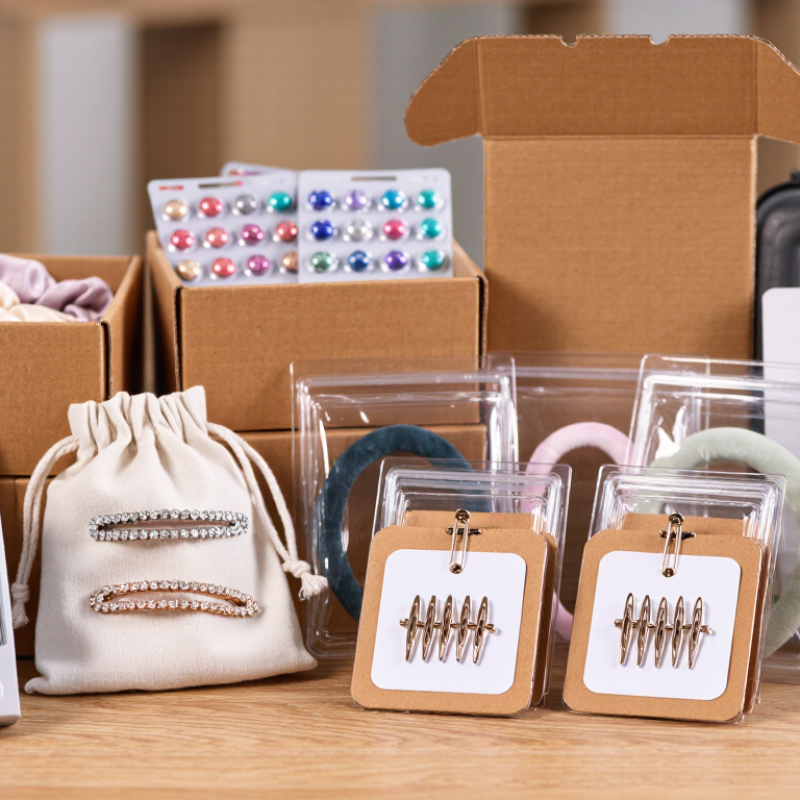
10 Best Packaging Options for Hair Accessories
Choosing packaging for hair accessories means balancing unit cost with product protection and order flexibility. A slim paperboard sleeve may suit clips, while a clear pouch can keep small elastics visible. Compare total landed cost, not just the quoted price: inserts, printing, freight, and storage all add up. Check each supplier’s minimum order quantity (MOQ) against your sales forecast. A low-cost carton is less useful if it leaves you with years of excess stock. Small trial runs help, though they may cost more per unit.
For products shipped through parcel networks, ask whether the packed item has been evaluated under ISTA 3A procedures. The test simulates common distribution hazards, including drops and vibration, but results depend on the exact package and setup. A test on one box design does not automatically validate another. Request the report and confirm that it matches your dimensions, materials, and packed accessories. Tiny metal clips can shift or scratch finishes; a snug insert may prevent that. It is easy to overlook this detail.
Tips: Request cost breaks at several quantities, a written MOQ, and carbon data that states its boundary and method. Compare packaging weight and recycled content, but avoid treating one figure as the whole story. Carbon estimates can vary, and supplier data may be incomplete. Ask for the source, then note any gaps before making a claim.
| Packaging option | Typical construction and best use | Indicative unit cost (USD) | Typical MOQ | ISTA 3A protection outlook | Screening carbon estimate (kg CO₂e / 1,000 packs) | Key trade-off |
|---|---|---|---|---|---|---|
| Folding paperboard carton | Printed or unprinted carton; suitable for clips, scrunchies, headbands, and gift sets. | $0.12–$0.45 | 500–2,000 | Provides shape and light crush resistance; use an outer shipper and test the complete parcel configuration. | 18–45 | Good printability; carton alone may not protect fragile or protruding items in parcel shipping. |
| Corrugated mailer box | Single-wall corrugated mailer, often with a folding self-locking design; suited to online orders and multi-item kits. | $0.25–$0.85 | 250–1,000 | Strong starting point for parcel protection; size, board strength, void fill, and product restraint still require testing. | 25–80 | Protective and easy to assemble, but uses more material than a flexible mailer. |
| Kraft paper mailer | Paper envelope or expandable mailer; best for flat, non-fragile accessories and lightweight refills. | $0.10–$0.40 | 500–2,000 | Limited cushioning and edge protection; generally needs a separate inner pack for delicate accessories. | 20–65 | Lightweight and often paper-recyclable where accepted; unsuitable for crush-sensitive products without added protection. |
| Recycled-content LDPE poly mailer | Flexible polyethylene mailer; commonly used for soft, lightweight items such as fabric scrunchies. | $0.08–$0.30 | 500–2,000 | Resists moisture and tearing, but offers little crush or impact protection; test with the actual contents. | 20–55 | Low shipping weight; recycling availability depends on local collection programs and material acceptance. |
| Paper-padded mailer | Paper outer layer with a paper cushioning liner; suited to small accessories needing modest impact protection. | $0.20–$0.65 | 250–1,000 | Offers more cushioning than a flat paper mailer; validate protection against the product’s fragility and parcel route. | 25–80 | Convenient for single-item orders; padded construction may increase material use and shipping dimensions. |
| Corrugated box with molded-pulp insert | Outer corrugated box with a shaped fiber insert that holds clips, barrettes, or other items in position. | $0.45–$1.40 | 1,000–5,000 | Can limit movement and provide cushioning when correctly fitted; test the assembled pack, including insert retention. | 45–130 | Good product restraint; tooling and custom-fit inserts can raise cost and MOQ. |
| Printed card with PET blister | Formed clear PET shell attached to a printed backing card; often used for retail display of small accessories. | $0.10–$0.50 | 1,000–5,000 | Helps retain the item and resist handling damage; a retail blister is not a substitute for a tested shipping carton. | 35–95 | Strong visibility and retention; mixed materials can make separation and recycling more difficult. |
| Paper display card with small protective bag | Printed paper card paired with a lightweight bag; suitable for low-cost retail presentation of lightweight items. | $0.05–$0.25 | 1,000–5,000 | Primarily presentation packaging; requires protective outer packaging for parcel shipments and fragile contents. | 15–50 | Low material use and compact storage; bag material affects recyclability and carbon results. |
| Reusable fabric pouch | Sewn cotton or polyester pouch; appropriate for gift sets, storage, or premium presentation. | $0.35–$1.50 | 500–2,000 | Protects against scratches and dust but provides little crush protection; place inside a tested shipper for delivery. | 45–120 | Reusable by the customer; production impacts are higher than lightweight single-use packs and depend on reuse. |
| Rigid setup gift box | Heavy paperboard box, often with a paper or foam insert; designed for gift sets and premium presentation. | $0.80–$3.00 | 500–2,000 | Rigid walls resist deformation, but corners and contents may still need cushioning; test in the final shipping configuration. | 100–300 | Premium appearance and durability; higher material use, cost, and dimensional shipping weight. |
Data notes: Cost and MOQ figures are indicative procurement ranges in USD for common packaging formats; actual quotes vary by size, print, material, order quantity, supplier, and destination. Carbon figures are screening estimates per 1,000 packaging units, not product-specific or independently verified life-cycle assessments; they assume typical material weights and generic material-production factors and exclude the hair accessory and outbound transport. ISTA 3A is a parcel-distribution test procedure, not a protection rating: compliance can only be determined by testing the finished package with its contents under the applicable procedure.
Folding cartons suit clips, scrunchies, and lightweight headbands. They use less material and fold flat during shipping. Test corners carefully. Some failures appear only after repeated handling.
Use a rigid box for delicate accessories, travel sets, or items needing stronger protection. It can prevent crushing during delivery. However, it may add unnecessary material for durable products. A sturdy look is not always practical.
Mailers work well when accessories already have inner support. They reduce shipping volume and may lower packaging weight. Add paper padding when crushing is possible. Measure empty space before approving the design.
Kraft pouches protect surfaces and create a premium feel. Poly bags are lighter and resist moisture. Tissue wrap improves presentation but offers little impact protection. It can also slow packing more than expected.
Small weight increases can affect shipping costs across many parcels. Saving 10 grams per parcel saves 100 kilograms across 10,000 orders. Parcel dimensions also matter because dimensional weight may apply. A tiny change can become expensive.
They help only when customers reuse them several times. A case used ten times may justify extra material. A fabric bag used once does not. Track reuse cycles, returns, cleaning, and damage. Reuse is not automatic.
Avoid unnecessary coatings, mixed layers, and permanent plastic attachments. Choose structures that customers can separate easily. Paper is not always the perfect substitute. Moisture, abrasion, and transport conditions still matter.
Run drop and compression tests with real accessories inside. Check corners, closures, seams, and empty space. Try damp hands and a crowded suitcase. One weak stitch can end the reuse plan. Test again after customer handling.
Choosing the right packaging for hair accessories requires balancing product protection, presentation, cost, and environmental impact. This guide explains what packaging options are available for hair accessories, including folding cartons, rigid boxes, mailers, blister packs, PET clamshells, kraft pouches, poly bags, tissue wraps, reusable cases, and fabric bags. Each format offers different benefits in terms of visibility, durability, shipping efficiency, minimum order quantities, and overall customer experience.
The article also introduces practical selection metrics, such as unit cost, MOQ, ISTA 3A protection, and the availability of carbon data. Paper-based packaging can support recovery and recycling goals, while plastic formats may provide stronger visibility and durability but require careful consideration of regional plastic requirements. Lightweight pouches and mailers can suit e-commerce fulfillment, whereas reusable cases and fabric bags may extend packaging life under ISO 18601 principles. Together, these options help businesses match packaging design with product needs, logistics, sustainability objectives, and customer expectations.

 Galz Fashion