Hair accessories are moving beyond simple decoration. In 2026, clips, headbands, scarves, and embellished pins may become small signals of identity, mood, and lifestyle. A pearl barrette can finish an office outfit. A bright claw clip can suggest relaxed weekend confidence. This shift helps explain what drives consumer demand for hair accessories.
Fashion psychologist Dr. Carolyn Mair offers a useful perspective: “Fashion is a powerful form of self-expression.” Her observation applies strongly to accessories because they change appearance without requiring a complete wardrobe. Consumers can test a trend with a modest purchase. They can also photograph the result immediately, which increases social visibility and emotional appeal.
Demand is also shaped by comfort, convenience, price, and product quality. Shoppers want secure clips that do not pull hair. They notice soft materials, strong hinges, and packaging that feels considered. Personalization matters too. Initials, colors, textures, and handmade details can make familiar products feel individual. Sustainability may influence decisions, although its impact is not always consistent. Some buyers prefer recycled materials, while others still choose low prices and fast delivery.
That contradiction deserves attention. Not every trend will last. Some accessories may look compelling online but feel impractical after one day of wear. Retailers should therefore study repeat purchases, customer reviews, and actual usage, rather than relying only on viral views. The strongest 2026 opportunities will likely combine visible style with everyday usefulness, proving that a small accessory can carry surprisingly large consumer expectations.
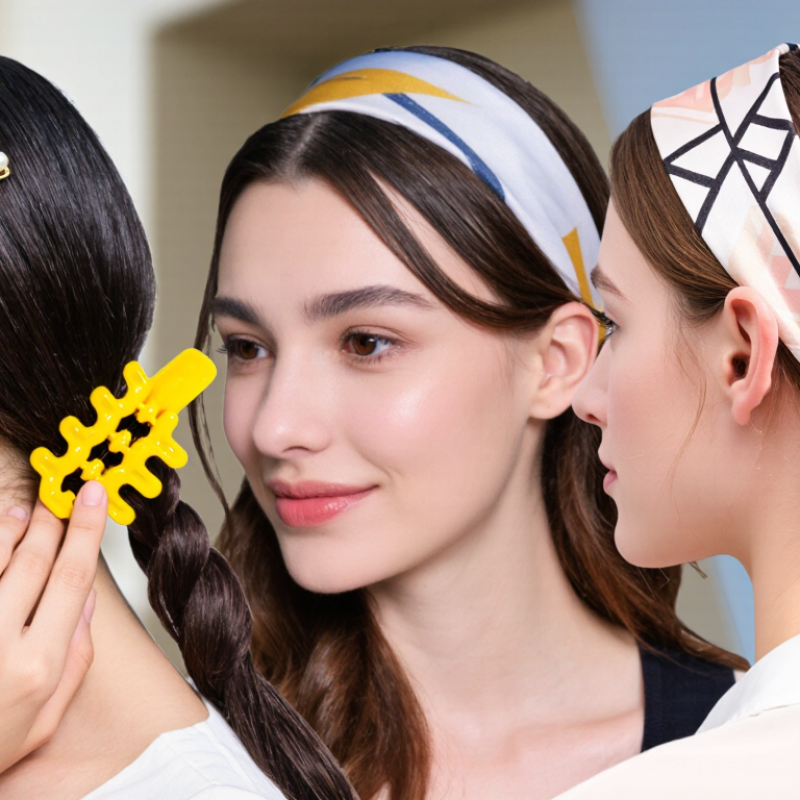
Hair accessories trends in 2026 refer to changing preferences for items worn in or around the hair. This scope includes clips, pins, bands, scrunchies, scarves, combs, and decorative headwear. It covers design, material, function, pricing, and use occasions. The definition is broader than runway styling. It includes ordinary choices made before work, travel, exercise, or a family event. Small details matter. A matte clip, for example, may signal a preference for quiet styling rather than formal decoration.
Demand is shaped by comfort, durability, self-expression, and fast styling. In retail observations, shoppers often touch hinges, stretch bands, and inspect edges before buying. That behavior suggests practical quality can matter as much as appearance. Search data, seasonal sales, and customer reviews can help identify movement, but none provides a complete picture. A short-lived color spike may look important. It may not last. Professionals should compare several markets and time periods before calling it a trend. Material sourcing and skin sensitivity also belong within the scope, because wearability influences repeat purchases.
The 2026 discussion should include digital influence, but not treat online visibility as proof of demand. Tutorial videos can accelerate adoption, while poor fit can quickly create negative feedback. Personal experience reveals this gap: a beautiful oversized barrette may slide from fine hair within minutes. That weakness deserves attention. Trends also differ by age, hair texture, climate, and cultural setting. Therefore, a reliable definition must describe both what people notice and what they continue using.
Hair clips, claw clips, and barrettes are leading the 2026 hair accessories conversation. Grand View Research estimates the global hair accessories market reached about USD 23.75 billion in 2023. Its forecast points to strong growth through 2030. These figures support continued demand for practical, visible products. Consumers want secure hold, quick styling, and attractive details. Oversized clips suit busy mornings, while slim barrettes support office and occasion dressing.
Elastic hair ties and scrunchies remain essential volume drivers. Their low price encourages repeat purchases and multi-pack sales. Mordor Intelligence expects the hair accessories market to expand steadily from 2025 to 2030. However, growth does not mean every design will succeed. Weak elastic recovery, sharp edges, or poor grip can quickly damage customer trust. Product testing should measure stretch, slippage, breakage, and comfort across different hair textures.
Headbands are also gaining attention, especially padded, fabric-covered, and adjustable formats. They combine styling with everyday function. Euromonitor’s beauty and personal care research continues to highlight convenience and self-expression as important consumer priorities. That insight matters for category planning. A soft headband may sell during workdays, travel, and light exercise. Still, comfort claims need evidence. Heat retention and pressure around the ears can become overlooked problems. The market is attractive, but product teams should question simple assumptions about “one size fits all.”
2026 Top Hair Accessories Trends: What Drives Demand?
Demand is shifting from decoration toward daily problem-solving. Consumers want secure clips, softer headbands, and lightweight pieces that survive commuting, workouts, and humid weather. Grand View Research estimated the global hair accessories market at about USD 21 billion in 2023, with strong growth expected through 2030. That trajectory reflects repeated purchases, not only seasonal fashion.
Cultural identity also shapes design choices. Headscarves, decorative pins, protective styles, and textured-hair tools can express heritage, faith, gender, or personal taste. Consumers increasingly expect accessories to work across hair types and styling routines. Euromonitor International’s 2024 beauty analysis highlights wellness, convenience, and personalization as major consumer priorities. A comfortable accessory supports these needs at a small cost.
Small details matter.
A smooth inner edge prevents pulling. Adjustable parts help different head sizes. Neutral colors may suit offices, while vivid patterns connect with festival culture and digital self-expression. Social platforms accelerate these shifts, but visibility is not the same as lasting demand. I may be overestimating trend speed here. Many viral shapes disappear quickly, while practical designs remain in bathroom drawers for years. Price sensitivity also matters, especially when consumers compare accessories with other personal-care expenses. Future demand will likely favor products that respect cultural use, reduce discomfort, and fit real routines rather than staged photographs.
Consumer needs and cultural factors driving demand for hair accessories
The demand index uses 2025 as a base of 100 and represents directional 2026 growth potential. Convenience, self-expression, affordability, and occasion-based styling are expected to remain the strongest drivers, while social-media-led aesthetics continue to accelerate trend adoption.
2026 Top Hair Accessories Trends: What Drives Demand?
Technology, Sustainability, and Innovation in Hair Accessories
Hair accessories are becoming small platforms for practical innovation. Grand View Research projects the global hair accessories market to grow at roughly 8% annually through 2030. Demand is shifting beyond decoration. Consumers want lighter clips, stronger grips, and adjustable designs for different hair textures. Smart fitting may appear through phone-based size guidance and simple scanning tools. Useful technology, not flashy technology.
Material choices now influence purchase decisions. Textile Exchange’s Materials Market Report 2024 found recycled fibers represented about 12% of global fiber production in 2023. That figure remains limited. A recycled claim can still hide mixed materials, difficult coatings, or poor durability. Designers should test fiber content, clasp strength, and repairability before making sustainability promises. A hair tie that breaks after three wears is not a responsible product.
Consumer willingness is measurable. PwC’s 2024 Voice of the Consumer Survey reported that 46% of respondents were buying more sustainable products, while consumers accepted an average 9.7% price premium. Yet price still matters. Innovation must balance recycled inputs with accessible manufacturing. Modular charms, replaceable elastic, and recyclable mono-material packaging could reduce waste without making products feel clinical. The weak point is verification. Clear material records and realistic care instructions may build more trust than vague environmental language.
Evidence-based demand indicators and innovation priorities for the 2026 hair accessories market
| Trend or Demand Driver | Relevant Market Signal | Verified Indicator | 2026 Implication for Hair Accessories | Recommended Product Response |
|---|---|---|---|---|
| Digital-first shopping | Consumers increasingly discover and purchase products through online retail channels. | U.S. e-commerce accounted for approximately 16.1% of total retail sales in 2024. | Online-ready products with strong visual appeal, clear specifications, and convenient delivery are likely to gain visibility. | Use compact packaging, high-resolution product imagery, short-form demonstrations, and clear fit-and-use information. |
| Sustainable materials | Plastic pollution and resource concerns are increasing pressure for lower-impact product design. | UNEP estimates that 19–23 million tonnes of plastic waste enter aquatic ecosystems each year. | Material transparency and credible environmental claims can become important purchase filters. | Prioritize recycled metals, certified natural fibers, bio-based materials, and packaging with reduced plastic content. |
| Circularity and durability | Longer product life and easier repair or recycling can reduce the environmental impact of frequently replaced accessories. | The European Environment Agency reports that millions of tonnes of textiles are discarded by European households each year. | Durable construction and end-of-life information can strengthen consumer trust and reduce replacement-driven waste. | Design replaceable springs, reinforced joints, mono-material components, repair instructions, and take-back guidance. |
| Personalization technology | Digital tools make it easier to recommend products according to hair type, styling needs, color preference, and occasion. | The International Telecommunication Union reported approximately 5.5 billion people online in 2024, representing about 68% of the global population. | Personalized digital experiences can improve product discovery and reduce uncertainty about fit and styling performance. | Offer hair-type filters, virtual styling previews, recommendation quizzes, and adjustable sizing options. |
| Comfort and hair protection | Consumers are seeking accessories that secure hair without excessive pressure, pulling, snagging, or breakage. | Demand is supported by the broader shift toward wellness-oriented and function-led personal-care products. | Comfort can become a stronger point of differentiation than decoration alone. | Develop soft-touch finishes, seamless edges, low-tension elastics, lightweight structures, and ergonomic grips. |
| Multifunctional products | Consumers value products that work across commuting, exercise, work, travel, and social occasions. | Multifunctionality is a product-design opportunity rather than a single market-size statistic and should be validated through consumer testing. | Versatile accessories can increase usage frequency and perceived value while reducing the need to buy multiple single-purpose items. | Create convertible clips, adjustable headbands, reversible designs, and accessories suitable for both styling and hair protection. |
| Inclusive sizing and universal design | Different hair densities, textures, lengths, and head sizes require more adaptable product architecture. | The need is structural: one fixed size cannot reliably serve all hair types and styling routines. | Inclusive fit can expand the addressable customer base and reduce returns caused by poor performance. | Test products on diverse hair profiles and publish measurements for opening width, stretch range, grip strength, and weight. |
| Smart and functional accessories | Technology is moving from novelty features toward practical benefits such as tracking, safety, organization, and personalized care. | Adoption should be measured through consumer trials because hair-accessory-specific smart-device data remains limited. | Successful smart products will need clear utility, low weight, reliable operation, and minimal impact on comfort. | Explore discreet location tags, temperature-aware styling tools, usage reminders, and modular electronic components. |
| Traceability and product transparency | Consumers and regulators are paying closer attention to material origin, production conditions, safety, and environmental claims. | The European Union’s General Product Safety Regulation began applying on 13 December 2024, strengthening product-safety responsibilities. | Accurate documentation and claim substantiation will be increasingly important for cross-border commerce. | Add scannable product information, material percentages, care instructions, safety warnings, and supplier documentation. |
| Low-waste packaging | Compact, recyclable, and easy-to-open packaging supports both sustainability goals and efficient online fulfillment. | Packaging waste is a recognized component of municipal solid waste and a key target of waste-prevention policies. | Packaging design can influence perceived product quality, shipping efficiency, and environmental credibility. | Use right-sized cartons, paper-based protective materials, water-based inks, and packaging that doubles as storage. |
2026 Top Hair Accessories Trends: What Drives Demand?
Hair accessories are moving from occasional styling items to everyday utility products. Grand View Research estimates the global hair accessories market could grow at about 7.7% annually through 2030. Demand is strongest across clips, elastics, headbands, and decorative pins. Functional segments benefit from hybrid work, gym routines, and quick morning styling. Fashion-led products gain attention through seasonal colors, metallic finishes, and textured materials. Small details matter. A secure clip, smooth edge, and comfortable grip can influence repeat purchases more than decoration alone.
Buying channels are becoming more fragmented. Online marketplaces support price comparison and rapid trend testing, while specialty stores allow customers to check weight, tension, and finish. Social commerce also shortens the path from video discovery to purchase. Euromonitor’s beauty and personal care research highlights continued digital shopping growth, but online conversion depends heavily on reviews and product demonstrations. Future opportunities include adjustable designs, low-waste packaging, and accessories made for different hair textures. Salons and professional stylists may become useful education channels, especially for premium products. The market still has weaknesses. Forecasts vary by report, and many studies combine hair accessories with broader beauty categories. Buyers should verify regional sales data before scaling inventory. One practical test is simple: place a small batch beside daily-use items, then track returns, breakage, and repeat orders for ninety days.
Hair clips, claw clips, barrettes, elastic ties, scrunchies, and headbands remain major categories. Practical styling drives demand.
Oversized clips offer quick styling during busy mornings. They can secure more hair with fewer adjustments. Not every large clip feels comfortable.
Check elastic recovery, grip, edge smoothness, and breakage resistance. Test them across curly, straight, thick, and fine hair.
Scrunchies usually cost less and often sell in multi-packs. Customers may buy several colors for work, travel, and casual outfits.
Soft fabric, adjustable sizing, and gentle pressure improve daily comfort. Heat around the ears can still become an overlooked problem.
Useful technology may include phone-based size guidance and simple scanning tools. The goal is better fit, not unnecessary decoration.
No. Mixed fibers, coatings, weak clasps, and short product life can reduce real benefits. A broken hair tie is not responsible.
Replaceable elastic, modular charms, durable materials, and recyclable packaging can reduce waste. Prices still matter to many shoppers.
Product teams should keep clear material records and provide realistic care instructions. Vague wording is weaker than useful details.
“One size fits all” may fail across different heads, hair textures, and styling habits. More testing is needed. Maybe much more.
The 2026 hair accessories market is moving beyond basic decoration to include products that combine style, comfort, practicality, and personal expression. Key categories include clips, scrunchies, headbands, hair ties, pins, combs, and protective accessories, with demand shaped by versatile designs, adaptable styling, and preferences across different hair types and age groups. The question of what drives consumer demand for hair accessories is closely connected to changing lifestyles, cultural influences, social media creativity, seasonal fashion, and the desire for affordable ways to refresh everyday looks.
Technology and sustainability are also influencing product development. Consumers increasingly value durable materials, reusable designs, comfortable construction, and packaging that reduces waste. Digital shopping, social commerce, specialty stores, and offline retail all provide important buying channels, while personalized recommendations and convenient delivery support market growth. Future opportunities will likely come from inclusive sizing, multifunctional products, eco-conscious innovation, and designs that balance emerging trends with long-term usability.

Galz Fashion